Do Political Words Kill? Deranque's Death & Mélenchon's Dilemma
The tragic death of Quentin Deranque, a 23-year-old student, in Lyon sent shockwaves across France, immediately igniting a fierce political debate that continues to reverberate. More than just a criminal investigation, Deranque's killing quickly became a crucible for broader questions about political rhetoric, its potential to incite violence, and the responsibilities of political leaders. At the heart of this storm stands Jean-Luc Mélenchon, leader of the left-wing La France Insoumise (LFI) party, facing intense scrutiny and a profound dilemma as his movement's ties to certain activist groups come under the spotlight. This incident forces France to confront a haunting question: in an increasingly polarized society, do political words truly kill?
The Tragic Death of Quentin Deranque and Its Immediate Aftermath
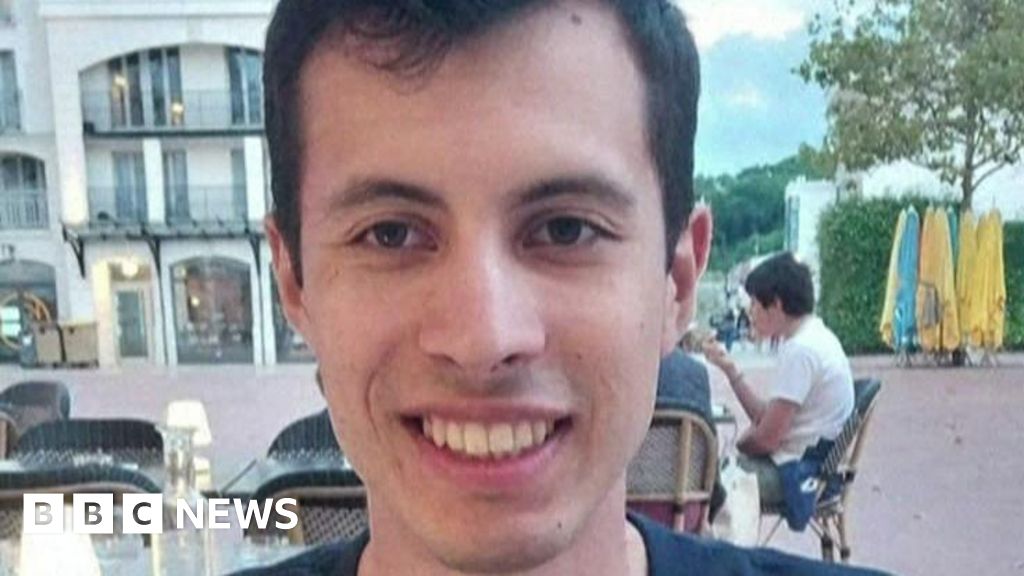
Quentin Deranque was brutally lynched in a street in Lyon on a Thursday evening. The young man, active in nationalist circles, was reportedly struck while on the ground by several individuals, likely targeted because of his political affiliations. His death, marked by extreme violence, plunged the nation into a state of shock and a "deleterious climate," as described by commentators.
The political response was swift and uncompromising. Almost immediately, prominent figures from the right-wing and far-right pointed fingers, drawing a direct line from political rhetoric to physical violence. Gérald Darmanin, the Minister of Interior, wasted no time in publicly implicating the "ultragauche" (far-left) and, by extension, La France Insoumise. He asserted on Public Sénat, "For a long time, we heard that the police killed. Here, we clearly see that it is the ultragauche which manifestly killed... I think there is a complacency of La France Insoumise, and of extreme parties in general, in political violence, and pretending not to see that words kill."
Similar sentiments were echoed by others. Bruno Retailleau declared, "It's not the police who kill in France, it's the far-left." Marion Maréchal went further, alleging, "Mélenchon and LFI's militia killed." Media outlets, such as the *Journal du dimanche*, amplified this narrative, with headlines like "The ultragauche kills." This rapid politicization of a violent death underscored the deep divisions within French society and the readiness of political actors to assign blame even as investigations were in their preliminary stages. The central argument articulated was clear: certain political discourse, particularly that perceived as radical or confrontational, could directly translate into fatal actions.
Unpacking the "Ultragauche" Connection: La Jeune Garde and LFI
As the political accusations mounted, the focus quickly narrowed to specific groups and individuals. Police investigations, while ongoing and requiring extreme prudence regarding the precise facts, began to center on elements within the "ultragauche." Laurent Nuñez, the Minister of Interior, indicated that "the ultragauche was at work."
The primary group placed under the microscope was *La Jeune Garde*, an anti-fascist movement with a strong presence in Lyon. This organization had previously been in the news when Bruno Retailleau sought its dissolution the previous year, a decision the group was challenging before the Conseil d'État. The critical connection that pulled La France Insoumise directly into the controversy was Raphaël Arnault. An LFI deputy, Arnault is also a co-founder of *La Jeune Garde*, creating a tangible link between the political party and the activist group accused of involvement in Deranque's death.
Further escalating the situation, a specific accusation emerged concerning Jacques-Elie Favrot, a parliamentary assistant to Raphaël Arnault. The *Collectif Nemesis*, a far-right group also demonstrating that evening, claimed to have recognized Favrot at the scene of the violence. Favrot, however, "formally denied" any responsibility for the tragedy, highlighting the immediate and intense mud-slinging that characterized the aftermath. The intertwining of political figures, parliamentary staff, and activist groups created a complex web of allegations and denials, making it difficult to separate fact from political opportunism. The scrutiny placed on LFI's associations with such groups quickly escalated, sparking a broader debate on whether a political party bears responsibility for the actions of its affiliates or members, especially when those actions turn violent. This incident brought to the fore existing tensions, prompting questions about the boundaries of political activism and the lines between legitimate protest and outright violence. For a deeper dive into these connections, read
Quentin Deranque Murder: LFI Faces Scrutiny over Far-Left Links and to understand the specific investigation, check out
Ultragauche Under Fire: Inside the Quentin Deranque Lynching Probe.
Jean-Luc Mélenchon's Political Tightrope Walk
For Jean-Luc Mélenchon, the death of Quentin Deranque and the subsequent accusations presented a severe political challenge. As the leader of LFI, he found himself in a precarious position, caught between condemning an act of violence and defending his movement and its affiliates from guilt by association.
Initially, Mélenchon responded by condemning the aggression, expressing empathy for the victim, and unequivocally rejecting violence. He asserted that LFI had "nothing to do with this story," attempting to distance his party from the tragic events. However, this immediate denial was met with skepticism from his political opponents, who continued to press the narrative of LFI's alleged complicity due to its perceived "complacency" towards radical groups.
The situation exposed significant discomfort within LFI leadership. Reports indicated a palpable "embarrassment" and "discomfort" among Mélenchon's allies, who were clearly consternated by Deranque's death. The challenge for Mélenchon was monumental: could he maintain his long-standing defense and encouragement of anti-fascist militants like those in *La Jeune Garde*, as he had done for months, while simultaneously rejecting the violence and placating public and political outrage? His past rhetoric, often fiery and uncompromising, was now being re-evaluated through the lens of this tragic event.
Mélenchon's dilemma encapsulated the broader challenge faced by leaders of movements that embrace direct action or radical activism. On one hand, he sought to galvanize his base and advocate for his political ideals, often by supporting groups that confront what they perceive as fascism. On the other hand, the direct link of such activism to a death forced him to confront the moral and political consequences, risking alienating mainstream voters and undermining his party's legitimacy. His response and future stance on groups like *La Jeune Garde* would be critical in defining not just his political future, but also the trajectory of La France Insoumise.
The Potent Question: Do Political Words Incite Violence?
The central, most haunting question arising from Quentin Deranque's death and its political aftermath is profound: *Do political words kill?* This incident reignited a critical debate about the responsibility of political leaders for the rhetoric they employ, especially in an era of heightened polarization.
There is a fine, often blurred line between passionate political discourse, intended to mobilize supporters and challenge opponents, and language that can be interpreted as incitement to violence. When politicians repeatedly demonize opposition groups, label them as existential threats, or fail to unequivocally condemn violence perpetrated in the name of a cause, they risk creating an environment where radicalized individuals feel justified in taking extreme action.
Insights suggest that while words alone do not pull triggers or throw punches, they can cultivate a climate of animosity and dehumanization that lowers the threshold for violence. In this context, the repeated accusations against the "ultragauche" and LFI for a "complacency" towards violence highlight a concern that tolerance of aggressive or confrontational tactics can be perceived as an implicit endorsement.
For political leaders, this incident serves as a stark reminder of the immense power and responsibility inherent in their platform. Every statement, every denunciation, every characterization of an opponent carries weight.
- Consider the Impact: Leaders must carefully consider how their words might be interpreted by their most fervent followers, particularly those prone to radicalization.
- Unambiguous Condemnation: A clear, consistent, and unambiguous condemnation of all forms of political violence, regardless of the perpetrator's affiliation, is crucial.
- Promote Dialogue: Actively fostering dialogue and seeking common ground, even with political adversaries, can help de-escalate tensions and counter the narrative of inevitable conflict.
- Address Root Causes: While rhetoric is key, addressing the underlying socio-economic and political frustrations that fuel extremism is also vital.
The death of Quentin Deranque underscores the urgent need for introspection within the political class. It compels a re-evaluation of the language used, the alliances formed, and the ultimate responsibility political actors bear for the climate they help create.
Conclusion
The death of Quentin Deranque tragically brought to the forefront the perilous intersection of political rhetoric and real-world violence in France. While police investigations continue to piece together the exact circumstances of the lynching, the political fallout has already left an indelible mark. Jean-Luc Mélenchon and La France Insoumise find themselves at a critical juncture, navigating accusations of complacency and struggling to reconcile their political alliances with the need to unequivocally condemn violence. This tragic event serves as a potent and sobering reminder to all political actors: words carry immense power, and in an increasingly fractured society, the line between impassioned speech and incitement can be perilously thin. The legacy of Quentin Deranque's death will undoubtedly continue to shape the debate on political responsibility and the urgent need for a more measured, less inflammatory public discourse.